
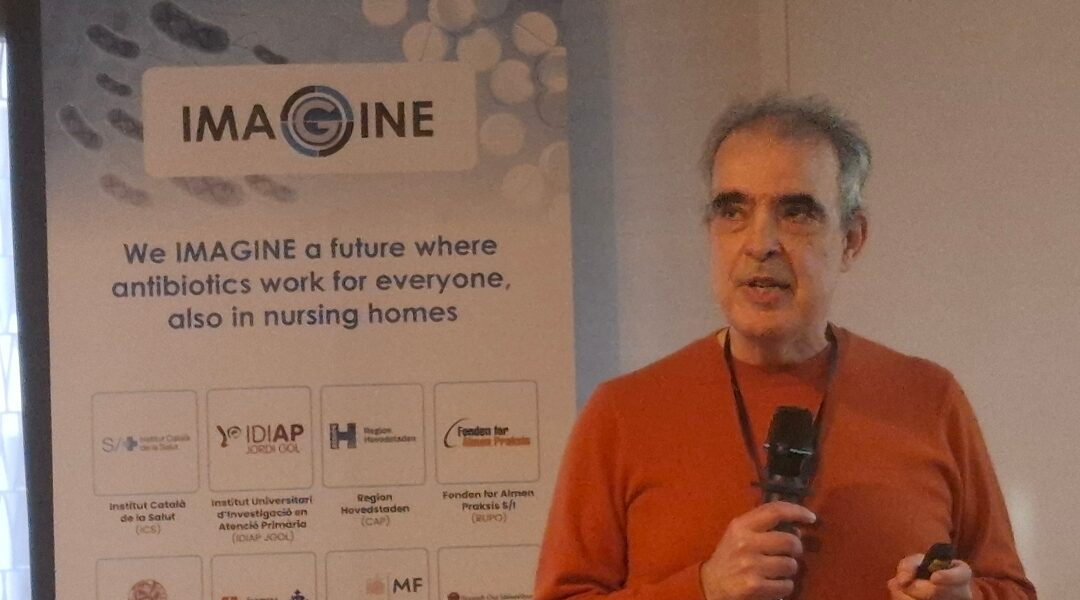
After three years of analysis, the IMAGINE Project comes to an end, but not without emphasizing the importance of continuing to work to curb antimicrobial resistance (AMR), a growing threat to global public health, with the targets set for 2030 still far from being achieved.
During his closing intervention at the Final Conference held in Barcelona on December 12th, Carl Llor, coordinator of the IMAGINE Project, highlighted that, although the project has made progress in strategies for responsible antibiotic use and infection prevention—notably achieving a 27% reduction in infections in participating nursing homes—the development of new antibiotics remains beyond the scope of the project, making continued efforts essential.
“Tackling antimicrobial resistance requires critical innovation on three fronts: responsible antibiotic use, infection prevention, and the development of new drugs. Within IMAGINE Project, we have worked on the first two with significant results,” Llor explained.
According to Llor, the project has implemented simple and practical methodologies, which allow its educational tools and protocols to be extrapolated to other nursing homes and long-term care facilities. “We have worked a lot, but the methodology is very simple and hands-on, so it means that this can be extrapolated to other settings”, explained. In this regard, he highlighted the active participation of healthcare staff in nursing homes from the very beginning of the project, which has been key to achieving the results, alongside the commitment of managers from more than 100 participating residences. The low dropout rate of 5% demonstrates the effectiveness and motivation of the participating teams.
Among the challenges highlighted, Llor noted the integration of social and healthcare services, high staff turnover, and the lack of involvement from some prescribers. Nevertheless, the project has succeeded in empowering nursing staff, enabling the early identification of urinary tract infections through a simple algorithm and promoting behavioural change in antibiotic prescribing habits.
For Llor, the results speak for themselves: a 27% reduction in the incidence of urinary tract infections in participating residences and a positive impact in terms of economic efficiency, demonstrating that IMAGINE Project interventions are effective and generate significant healthcare cost savings. “We have to change the mentality, the behaviour, and this methodology we have used in this project is able to change the mentality of the healthcare professionals”, highlighted.
Finally, Llor took the opportunity to acknowledge the effort of the entire consortium and project leaders, highlighting the contributions of key individuals such as Anders Bjerrum and Ana Garcia-Sangenís, who were instrumental in the creation and development of the proposal that has driven the project’s success over three years of work.